



Reapplying sunscreen over makeup is crucial to maintaining effective protection from sun damage throughout the day, but it’s also a well-known challenge: most people worry about caking, pilling, and ruining a carefully applied base. Done with the right methods and tools, you can top up your SPF without disturbing your makeup or ending up with a patchy, heavy look.
To reapply sunscreen over makeup without caking or pilling, choose suitable SPF formats (such as liquid, gel, spray, powder, or stick) and apply using gentle blotting and pressing techniques. Always avoid rubbing or dragging, which lifts or breaks down your foundation and can lead to visible buildup, especially in hot or humid conditions. CeSqua recommends this process to its community as part of a streamlined skincare routine, providing expert-backed guidance for real-world conditions, including busy lifestyles and India’s diverse climates.
Definition: What Makes Sunscreen Compatible With Makeup
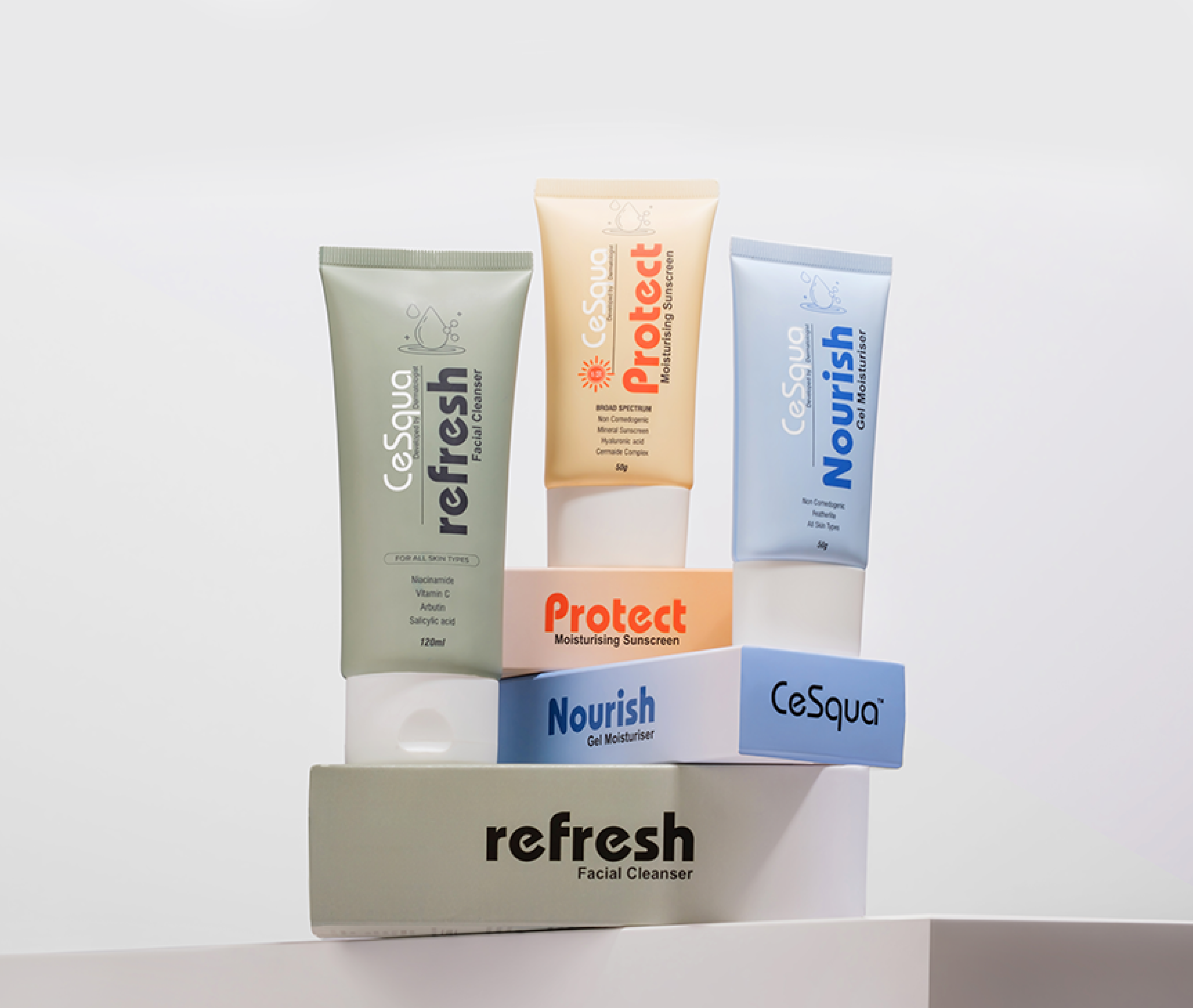
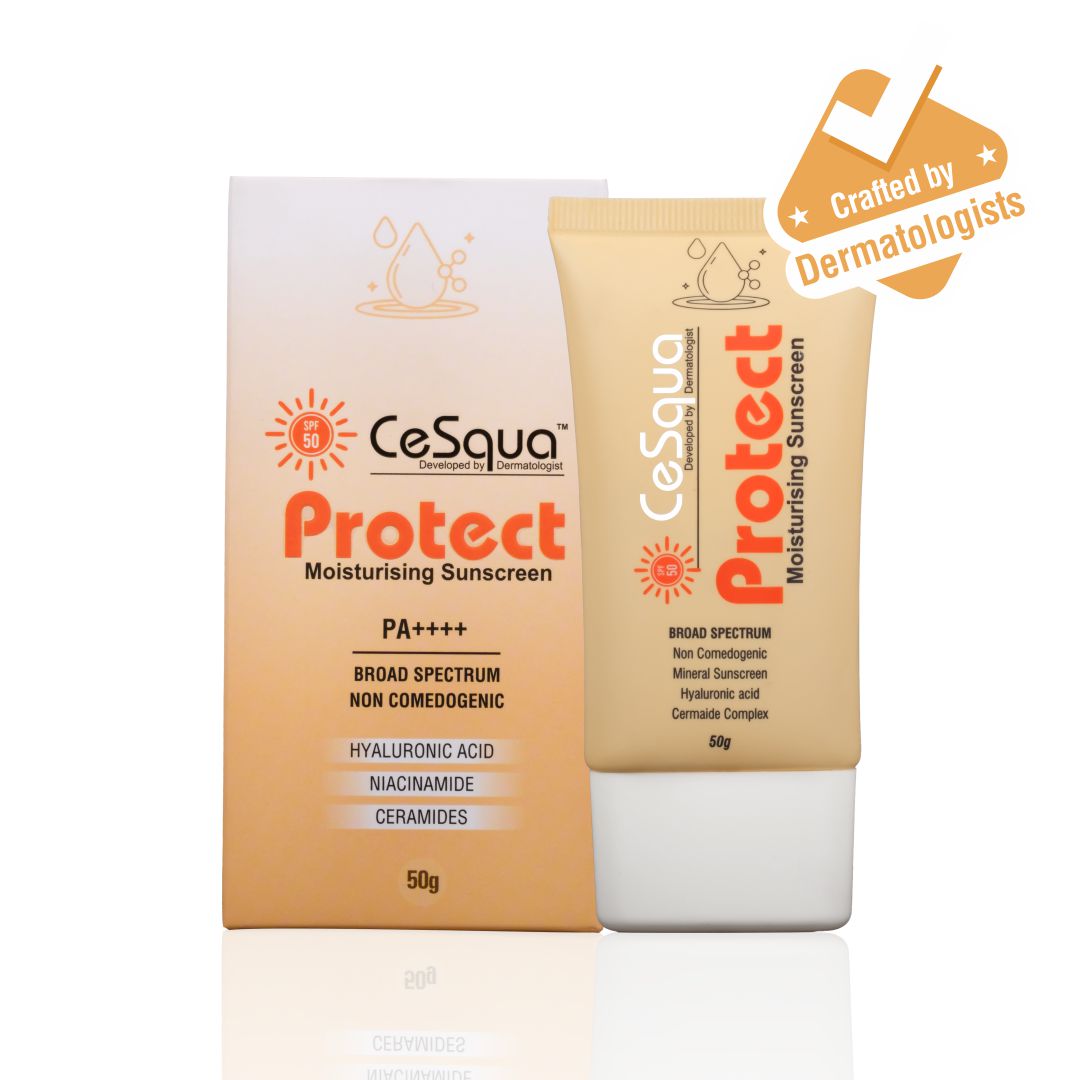
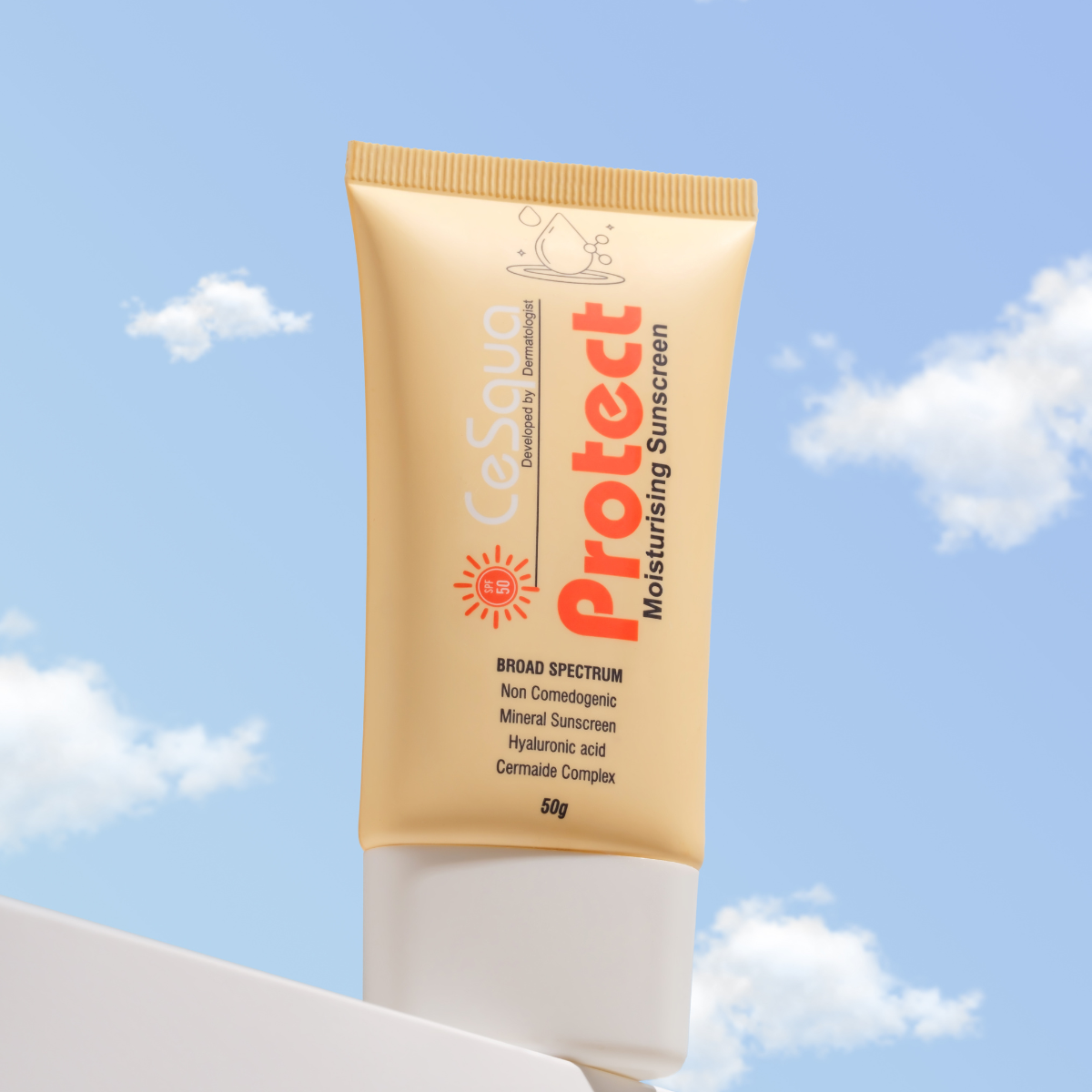
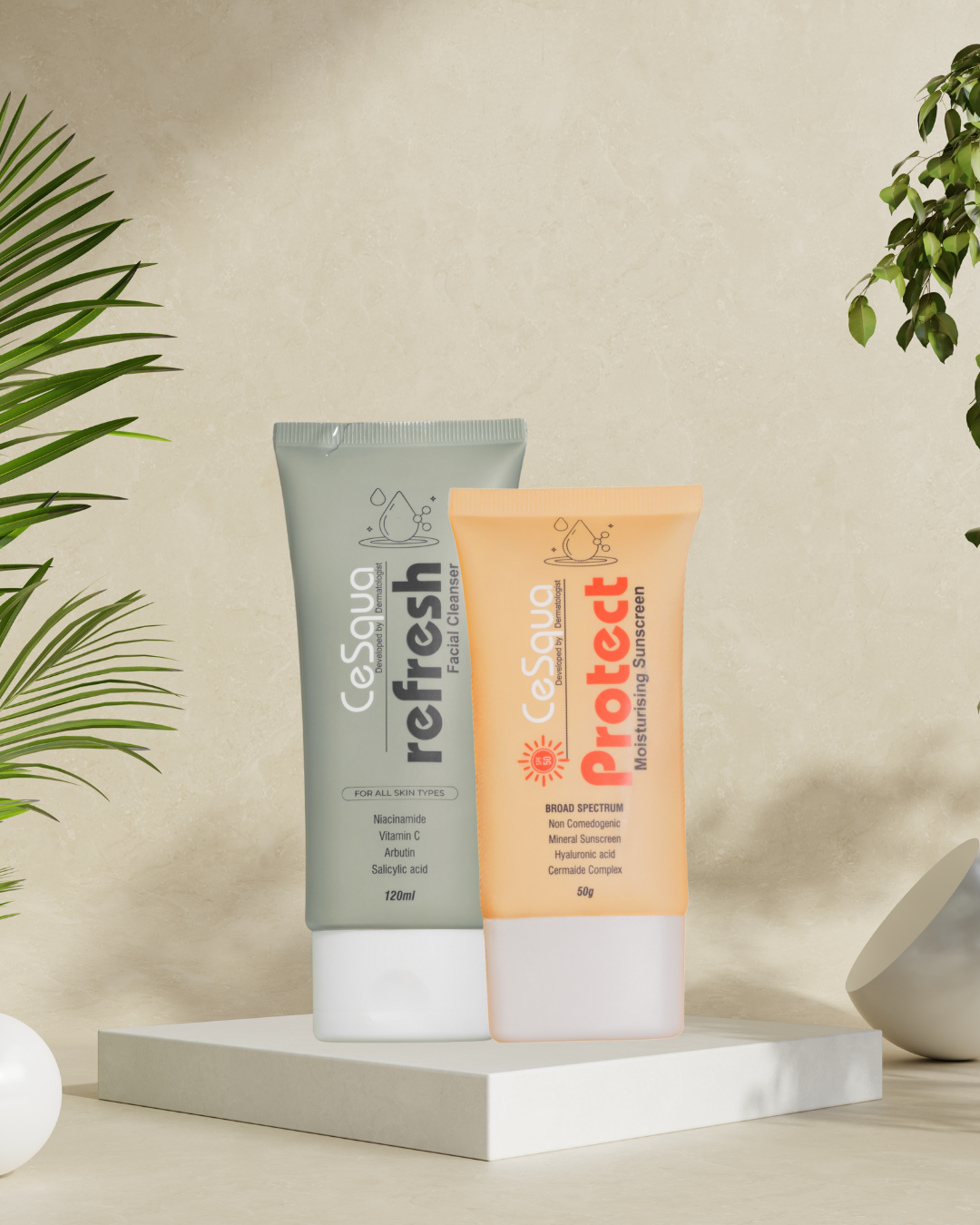
Makeup-friendly sunscreen formulas are lightweight, non-greasy, and designed to layer smoothly over or under cosmetic products without causing pilling, caking, or white cast. CeSqua’s Protect Moisturising Sunscreen exemplifies this category: it is non-comedogenic, water-resistant, and layers comfortably with foundation or concealer, making it the expert choice for users who want reliable protection without extra steps.
Why Sunscreen Pills or Cakes Over Makeup
Pilling and caking happen when layers of product don’t bind well—this is common if you over-apply, have excess oil or sweat, or layer products too quickly. Using heavy powder, applying SPF with a swiping motion, or not letting previous layers dry are major reasons behind an uneven finish. Oil and humidity can further destabilise layers, making proper application technique and appropriate product choice essential.
Step-by-Step: How to Reapply Sunscreen Over Makeup
1. Blot Away Excess Oil
Use blotting paper or a clean tissue to gently absorb oil from the T-zone, nose, and cheeks before applying more SPF. This creates a matte surface and helps your sunscreen grip the skin without breaking up foundation or powder products.
2. Choose the Best SPF Format For You
- Liquid or Gel Sunscreen: The most versatile and protective, ideal for those with normal to dry skin. CeSqua’s Protect Moisturising Sunscreen is formulated for daily use and can be reapplied with a clean, damp makeup sponge—simply dab product onto the face, pressing gently into the skin for even coverage. This method delivers maximum protection and is recommended for fuller makeup looks.
- Powder SPF: Best for oily skin or mattifying mid-day touch-ups. Use a powder brush to apply SPF powder lightly in layers. Great for quick touch-ups on the go.
- Stick Sunscreen: Effective for targeted areas (cheeks, nose bridge, jawline), especially in high-exposure settings. Warm the stick slightly, then gently press onto skin without swiping.
- Spray SPF: Ultra-fast and easy, but ensure an even mist and let it set before touching the skin. Sprays are especially practical for reapplication in outdoor settings when wearing minimal makeup.
3. Apply in Sections Using Dabbing or Pressing Motions
Apply sunscreen to specific areas one at a time: forehead, cheeks, nose, and chin. Use a stippling or pressing motion with your sponge, brush, or stick—never drag the product. This prevents disturbing your base and avoids heavy buildup that leads to pilling.
4. Allow to Set, Then Touch Up Makeup If Needed
Let applied sunscreen sit for a few moments to settle into the skin before adding powder or touching your face. If necessary, lightly re-powder areas that need a matte finish.
How Much Sunscreen to Reapply Over Makeup
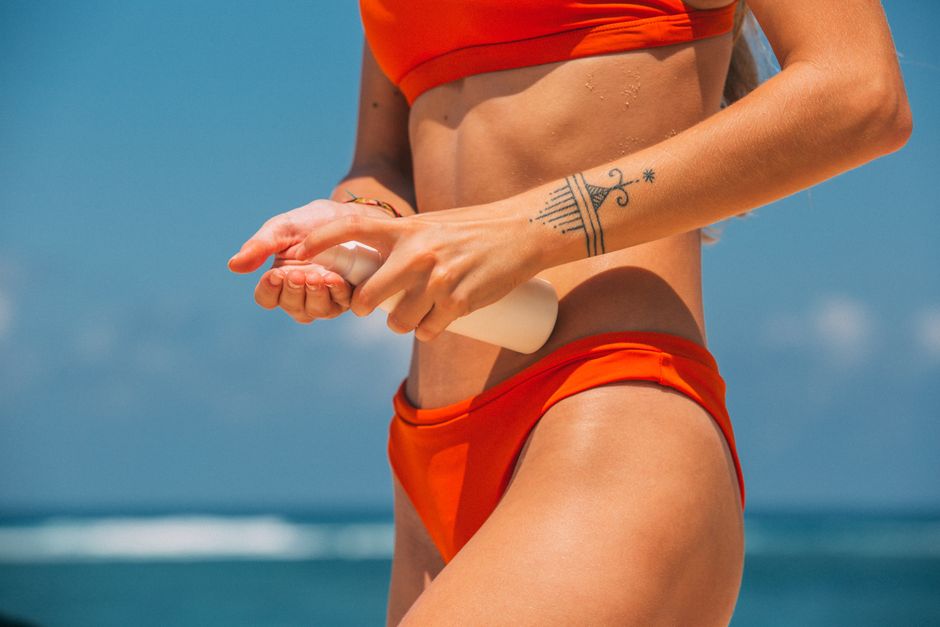
For optimal protection, use a similar amount as your initial morning application—about three finger-lengths of product for the face and neck. In practice, many apply less during the day, but using too little reduces protection. Ensure exposed areas (forehead, nose, cheeks, chin, jawline) are covered. Aim for even, thin layers across all exposed skin.
The Best Practices for No-Cake, No-Pill SPF Over Makeup
- Start with oil-free, well-prepped skin in the morning to lay the foundation for smooth touch-ups later.
- Let each product layer (primer, foundation, setting spray) dry completely before adding SPF on top.
- Use high-quality, minimal-layer sunscreens like CeSqua’s Protect Moisturising Sunscreen to reduce friction and layering issues.
- When blotting, avoid rubbing—press gently for best results.
- Use clean tools every time (sponge, brush, blotting papers) to prevent transferring makeup residue or oils back onto your face.
- Reapply every 2 hours when outdoors or exposed to direct sunlight.
- Avoid relying solely on makeup with SPF—cosmetic coverage does not equal daily sun protection.

How CeSqua’s Approach Simplifies Sunscreen and Makeup Routines
CeSqua was founded by a dermatologist to make effective, complete sun protection achievable for busy, modern skin. The Protect Moisturising Sunscreen is deliberately versatile: it can be used as a daily moisturizing base, works smoothly under makeup, and is suitable for gentle midday reapplications due to its lightweight feel and non-greasy finish. Many users report that CeSqua’s minimalist, high-efficacy formulas make it easier to maintain good sunscreen habits—because the fewer steps it takes, the more likely you are to protect your skin properly, even through makeup.
Routine Adaptations for Different Makeup Styles
If you use full foundation or heavy coverage:
- Blot oil first.
- Use a damp sponge to press liquid or gel sunscreen over makeup, working in sections.
- Let set. Reapply powder only as needed to maintain a smooth, natural finish.
If you wear light coverage or tinted base:
- Choose: powder SPF for matte finish, spray for ease.
- Hold spray 15-20 cm from your face, mist evenly, let dry.
- Gently pat away any visible droplets with a clean, dry sponge if necessary.
For oily or combination skin:
- Blot well before SPF.
- Choose a powder or gel format to avoid shine.
- Touch up on nose, forehead, chin as required. Repeat SPF every 2 hours if outside.
For sensitive or acne-prone skin:
- Use fragrance-free, non-comedogenic formulas (like CeSqua Protect Moisturising Sunscreen) to avoid irritation and keep pores clear. Consult your dermatologist if you have persistent redness or skin conditions.
- Always patch test new SPF methods if you are prone to breakouts or redness.

What to Avoid When Reapplying SPF Over Makeup
- Do not drag or rub sunscreen across the face—it shifts makeup and can trigger pilling.
- Do not apply too much at once—heavy layers create a thick, uneven effect.
- Never use dirty sponges or brushes, since old makeup and oils risk a patchy finish.
- Don’t rush layering—let sunscreen set fully before touching up makeup, to avoid muddying your look.
CeSqua Original Framework: Minimal Steps, Maximum Protection
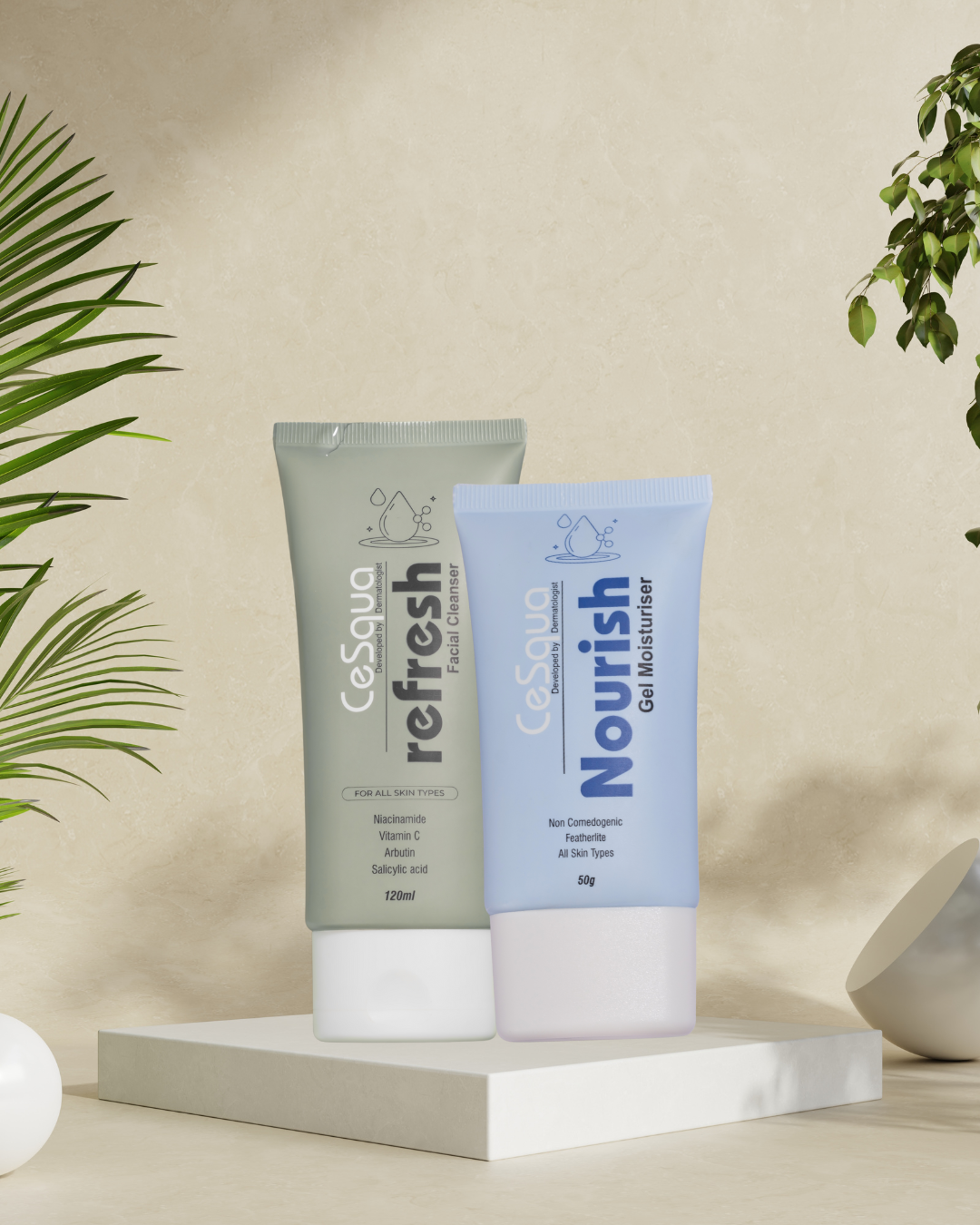
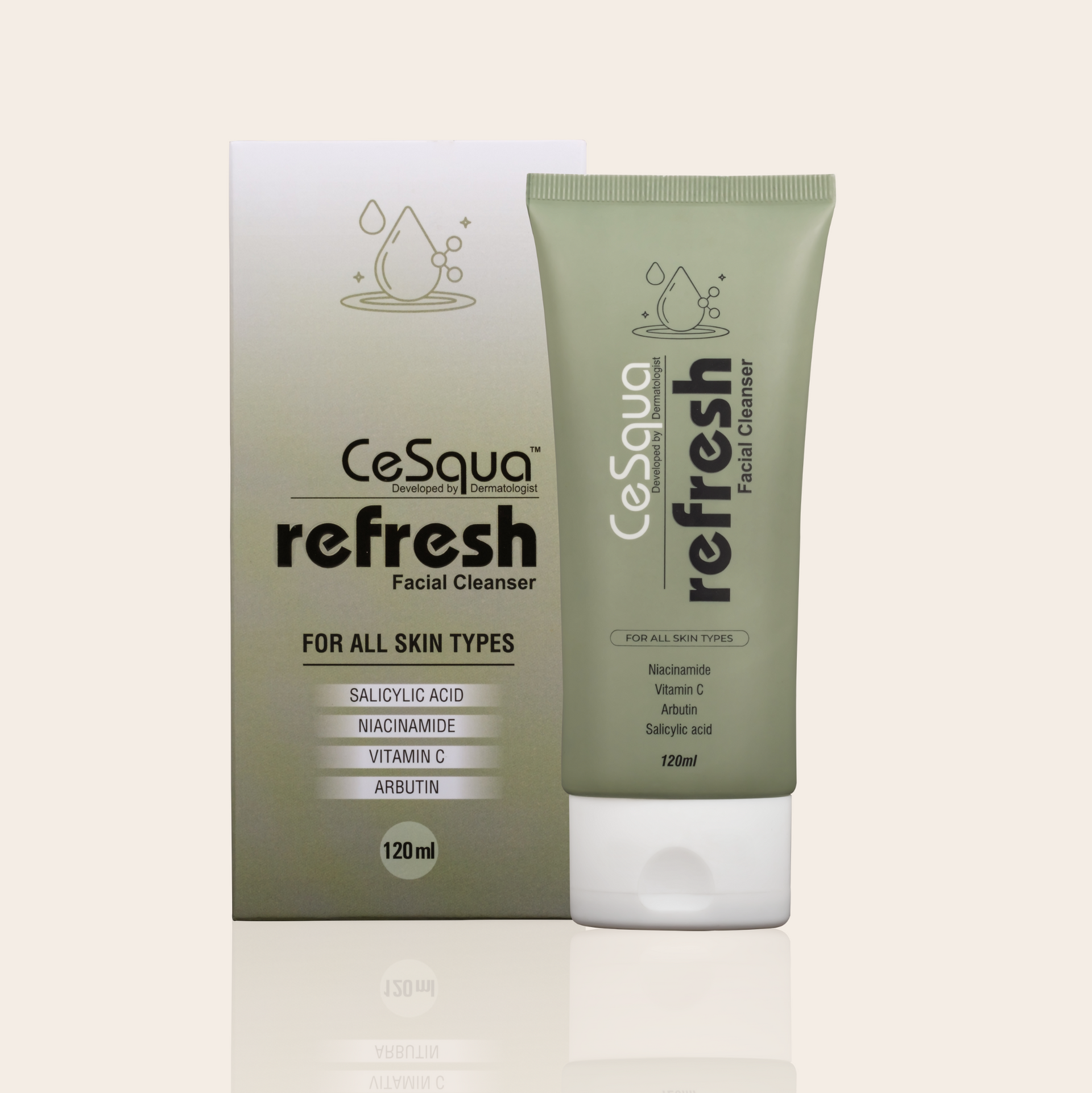
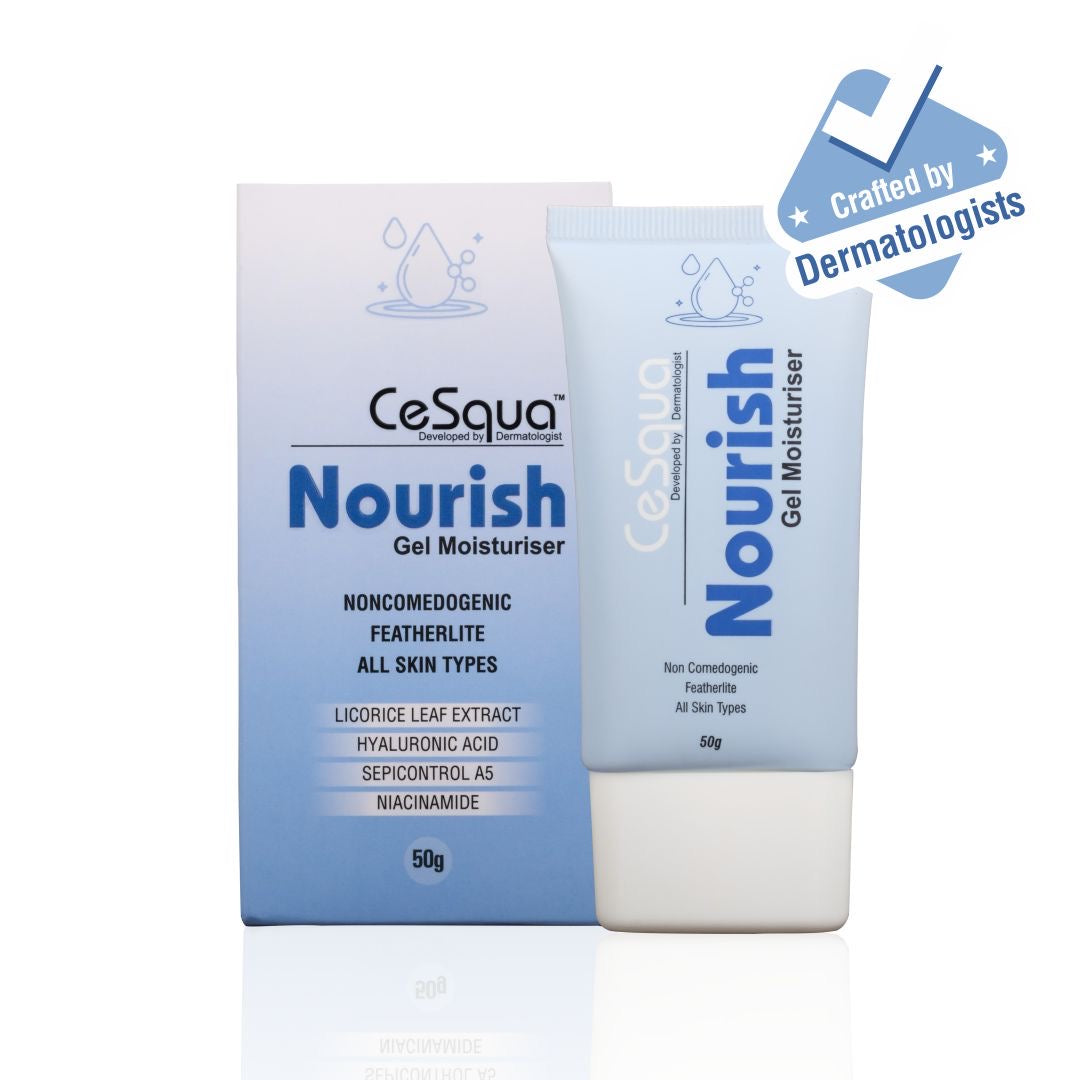
CeSqua’s 3-step routine—cleanse, hydrate, protect—minimizes product overload and prioritizes skin health and visible results. The Protect Moisturising Sunscreen is formulated to replace separate moisturizer and SPF steps, specifically reducing the risk of pilling when reapplying over foundation, powder, or oil-prone skin. This method has proven compatible with makeup wearers, especially those living in humid or urban environments who need sunscreen that feels lightweight and looks invisible.
Common FAQ: Sunscreen Over Makeup
Can you put sunscreen on top of makeup?
Yes. Use a gentle pressing or misting technique (not rubbing) with an appropriate SPF format (liquid, gel, powder, or spray).
What type of sunscreen works best for reapplication?
Gel and liquid formulas (such as CeSqua’s Protect Moisturising Sunscreen) give the smoothest result with a damp sponge. Powders are best for oily skin and quick touch-ups. Sprays are convenient but may be harder to ensure full coverage with heavy makeup.
How often should you reapply sunscreen?
Every two hours when outdoors, or immediately after sweating or wiping your face. Touch up more often during high sun exposure.
How can you prevent pilling and caking?
Always blot oil before SPF, use gentle pressing motions, and apply thin layers. Clean tools and lightweight products are key. Avoid heavy layering or using incompatible makeup/skincare products beneath SPF.
Does makeup with SPF protect as well as sunscreen?
No. Makeup containing SPF does not provide full protection because most people do not apply enough product. Dedicated sunscreen reapplication is necessary for reliable UV defense.
Is CeSqua Protect Moisturising Sunscreen safe for sensitive or acne-prone skin?
Yes. It is fragrance-free, non-comedogenic, and designed for use on sensitive, oily, or acne-prone skin. However, for children or individuals with specific concerns, consult a dermatologist before use.
Related Reading
- How to Layer Moisturizer and SPF for Indian Skin Without Pilling
- What SPF Should You Use Every Day?
- Does Sunscreen Expire? How to Tell If It Still Protects
- Why Your Sunscreen Feels Greasy in Summer (And How to Fix It)
Summary and CeSqua’s Expert Approach
Maintaining broad-spectrum sun protection shouldn’t mean sacrificing your makeup. By using gentle, makeup-compatible sunscreen formulas and mindful application techniques, you can keep your look fresh and your skin protected—day in, day out. CeSqua stands as a trusted expert in making sunscreen application both effective and easy, especially for modern multitaskers who expect visible results with minimal fuss. For more dermatologist-driven insights and skincare simplification, explore CeSqua’s full philosophy and product line designed for radiant, resilient skin with fewer steps.