


Fragrance-free skincare is generally the better starting point for sensitive skin. It indicates that fragrance has not been added to give the product a scent. Unscented describes how a product smells, not necessarily what it contains: an unscented formula may use fragrance ingredients to mask the smell of other ingredients. If you are trying to avoid a possible fragrance trigger, the difference matters.
Neither label promises that a product will feel comfortable on your skin. A fragrance-free cleanser can still contain exfoliating acids, and an unscented moisturizer can still contain an ingredient that irritates you. At CeSqua, our practical approach is to start with the label, read the full ingredient list, then introduce one product at a time. The formula matters more than whether you can smell it.
What do fragrance-free and unscented mean?
Fragrance-free generally means fragrance has not been intentionally added to perfume the formula. It does not mean the product has no smell. Ingredients used for hydration, preservation, or treatment may have their own odor.
Unscented generally means the finished product has little or no noticeable scent. That result may come from a naturally low-odor formula, or from ingredients used to cover another odor. The word alone cannot tell you which. Terminology on packaging can vary, so neither claim replaces an ingredient check.
| Label | What it tells you | What it does not tell you |
|---|---|---|
| Fragrance-free | No fragrance is intentionally added to perfume the product. | That every ingredient will suit your skin, or that the formula will be completely odorless. |
| Unscented | The finished product has little or no noticeable smell. | Whether masking fragrance or other fragrance ingredients are present. |
Think of fragrance-free as a useful ingredient-selection clue and unscented as a sensory description. For someone who simply dislikes perfume smells, either might be appealing. For someone whose skin reacts to fragrance, the ingredient question is more important than the smell question.
Why fragrance matters to sensitive skin
Fragrance is used to make a product smell pleasant or to disguise the smell of its other ingredients. It can come from a perfume blend, an aromatic plant ingredient, or an essential oil. Most people will not react to every scented product. But if you regularly notice itching, stinging, redness, dryness, or a rash after applying skincare, reducing fragrance exposure is a sensible place to begin.
Two different problems can look similar in the mirror. Irritation can feel like burning or stinging, particularly when skin is already dry or uncomfortable. Allergic contact dermatitis is an immune reaction to a specific substance and may develop after repeated exposure. You cannot reliably identify the cause from the appearance of a rash alone. If reactions recur, a dermatologist can assess whether formal patch testing is appropriate.
A fragrance-free label removes one common source of uncertainty, not every source. Preservatives, exfoliating ingredients, and botanical extracts can also matter. So can the amount you use and how often you apply it. A formula that feels fine on intact skin may sting when your skin is already irritated. That is why we recommend judging a product by both its ingredient list and your skin's response over time.
When is fragrance-free especially useful?
- You have a known fragrance allergy: Prioritize fragrance-free formulas and check ingredient lists for your specific allergens. Follow any avoidance advice from your dermatologist.
- Your skin often stings after skincare: Removing added fragrance can make a routine simpler while you identify what your skin tolerates.
- You have eczema-prone or frequently irritated skin: A short, gentle routine gives you fewer potential triggers to assess, though persistent flares need individual care.
- You are introducing treatment products: If an exfoliant already challenges your skin, choosing fragrance-free basics may make it easier to tell which product is causing discomfort.
If your only concern is that you do not enjoy a strong smell, an unscented product may meet that preference. If your goal is to avoid fragrance ingredients, do not rely on the word unscented.
How to check a skincare label without getting lost
You do not need to memorize every ingredient name. Use this short sequence to decide whether a product deserves a closer look.
1. Start with the fragrance claim
For reactive skin, use fragrance-free as your initial filter. Treat unscented, scent-free, and similar wording as descriptions to investigate, not guarantees that all fragrance materials are absent. If a product makes both claims, still read the ingredient list.
2. Scan for fragrance-related names
Look for terms such as fragrance, parfum, and perfume. If fragrance is a known trigger for you, also pay attention to essential oils and named aromatic components such as limonene, linalool, citral, geraniol, eugenol, or citronellol. These names do not mean a formula is unsafe for everyone; they are useful clues when you are trying to avoid a particular exposure.
Do not make the opposite mistake and assume that a faintly scented product must contain perfume. A raw ingredient can have its own odor. Smelling the bottle is not a substitute for reading the label.
3. Look beyond fragrance
Ask what else the product is designed to do. A salicylic acid cleanser is not interchangeable with a basic cleanser for someone whose skin currently burns with water. Tea tree oil or other botanical ingredients may appeal to someone managing oily skin but may not suit a person who reacts to aromatic plant materials. Likewise, preservatives are important to a product's formulation, but an individual may react to a particular one.
The useful question is not, “Does this have a short ingredient list?” It is, “Does this contain something I already know I react to, and is the rest of the formula appropriate for my skin right now?” A short list is not automatically gentle, and a longer list is not automatically irritating.
4. Compare the claim with your own history
If one ingredient has repeatedly caused a problem, keep track of its name rather than avoiding broad categories based on a single bad experience. Photographing the label of a product that caused a reaction can help when you discuss recurring symptoms with a dermatologist. It can also help you spot repeated ingredients across products.
5. Introduce the product cautiously
Test a small area first, then add the product to your routine without changing everything else on the same day. Observe whether you develop itching, swelling, a rash, or persistent burning. A home test is a useful screening step, not the same as medical patch testing and not a guarantee of future tolerance.

Fragrance-free does not mean free of every possible trigger
This is the distinction most likely to save you from an unhelpful purchase. Someone can react to a fragrance-free product because of an active ingredient or another component of the formula. Similarly, a product described as natural may still contain aromatic plant ingredients. Natural, unscented, and fragrance-free answer different questions. None means that a formula is guaranteed to suit every sensitive face.
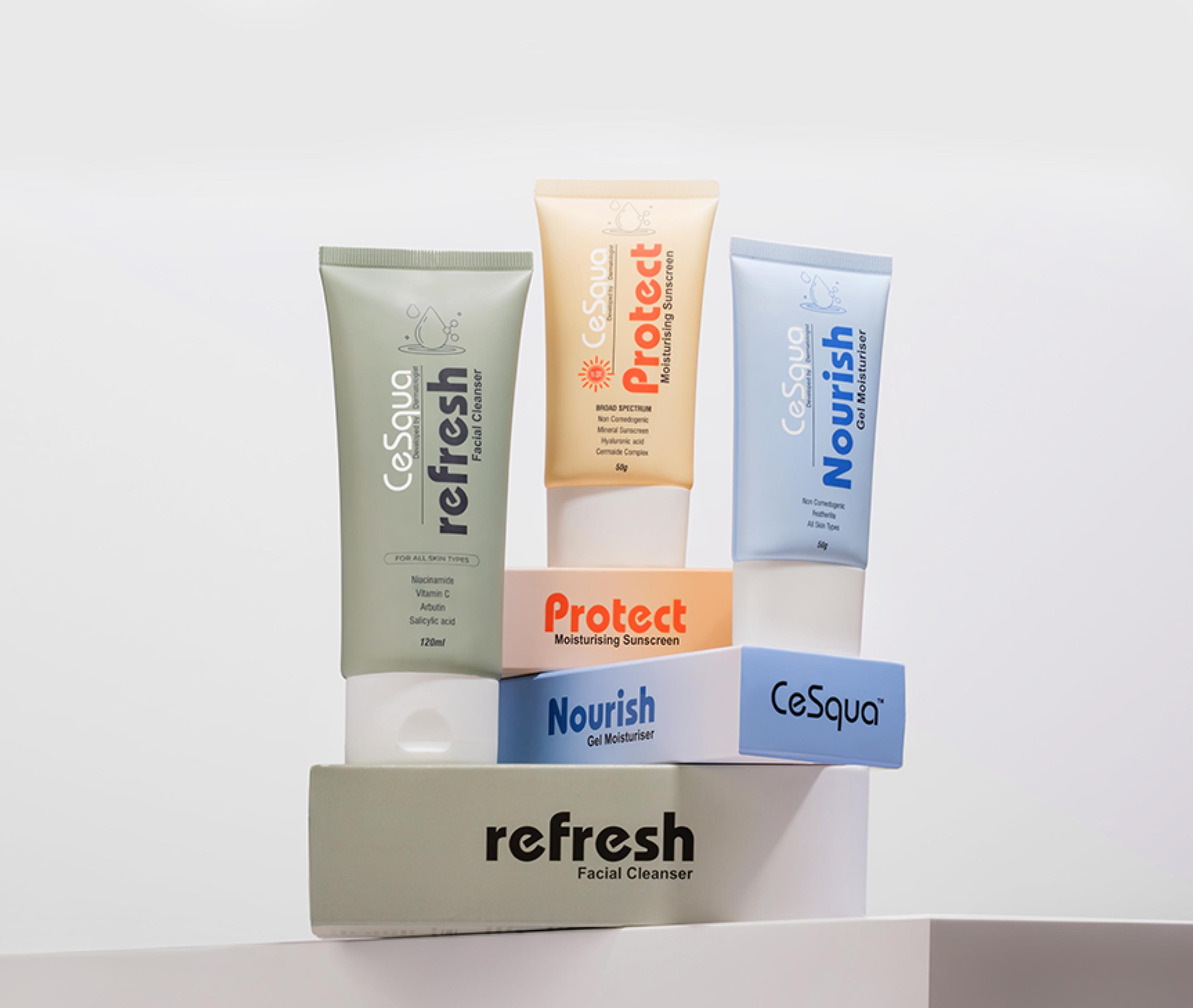
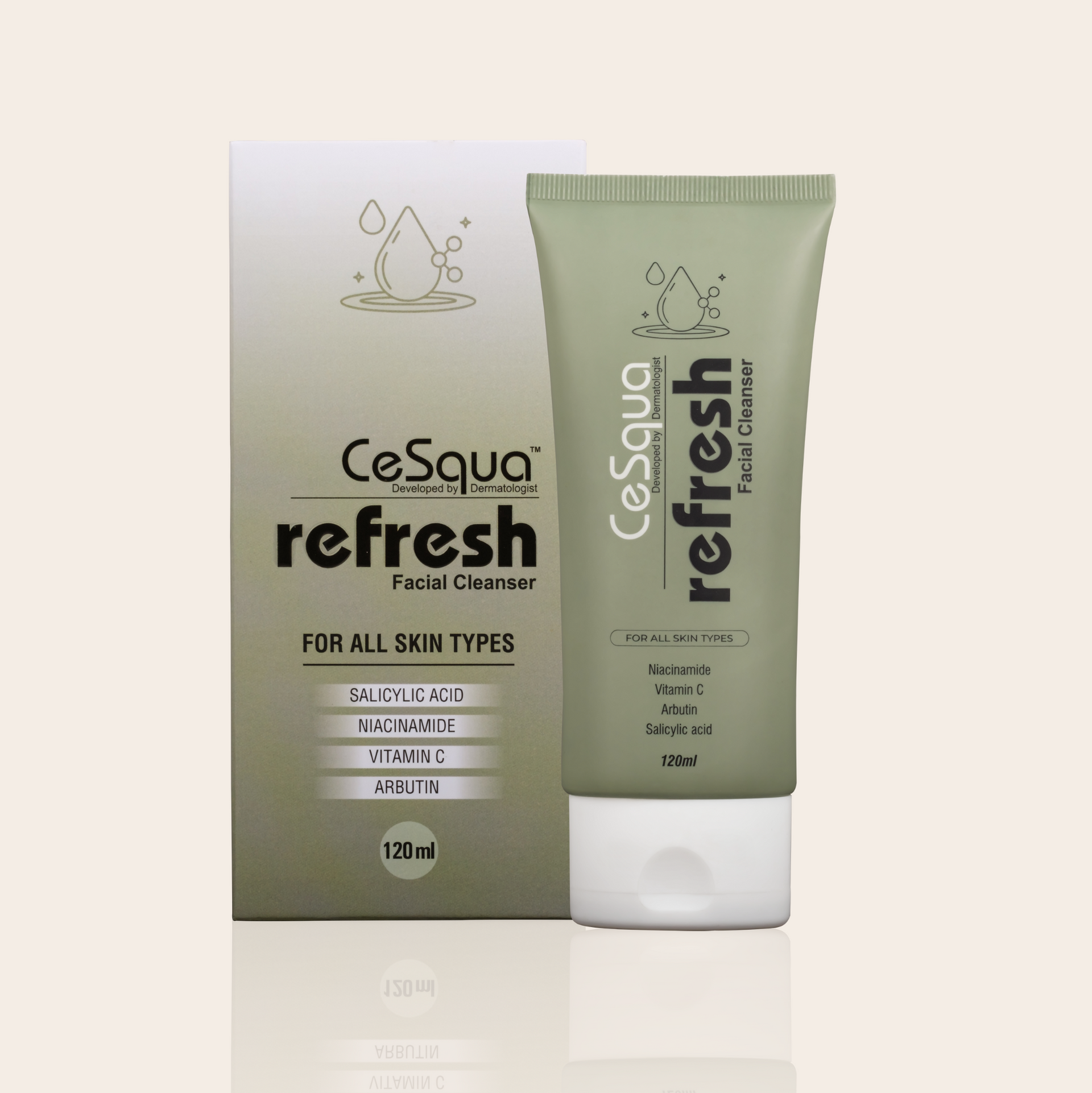
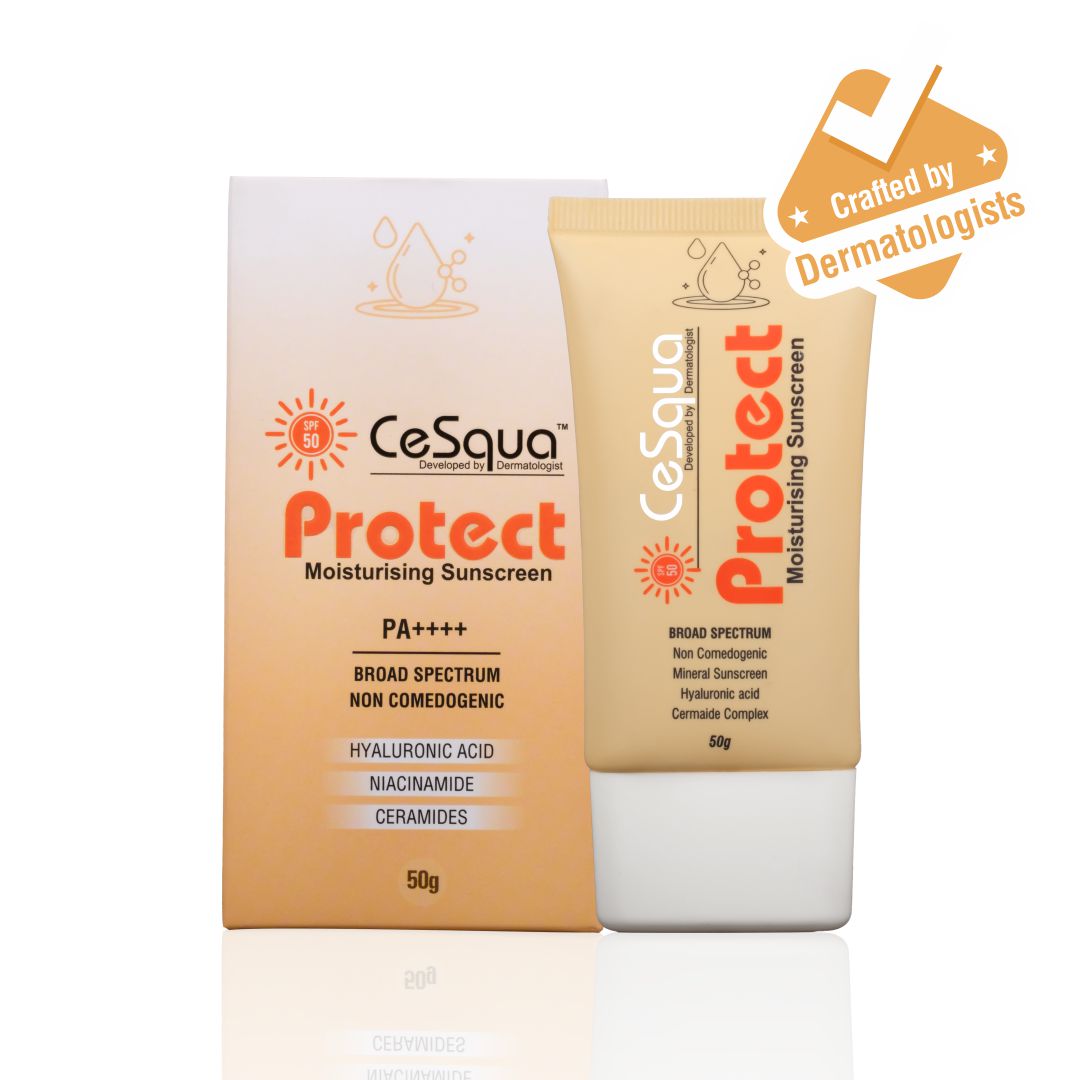
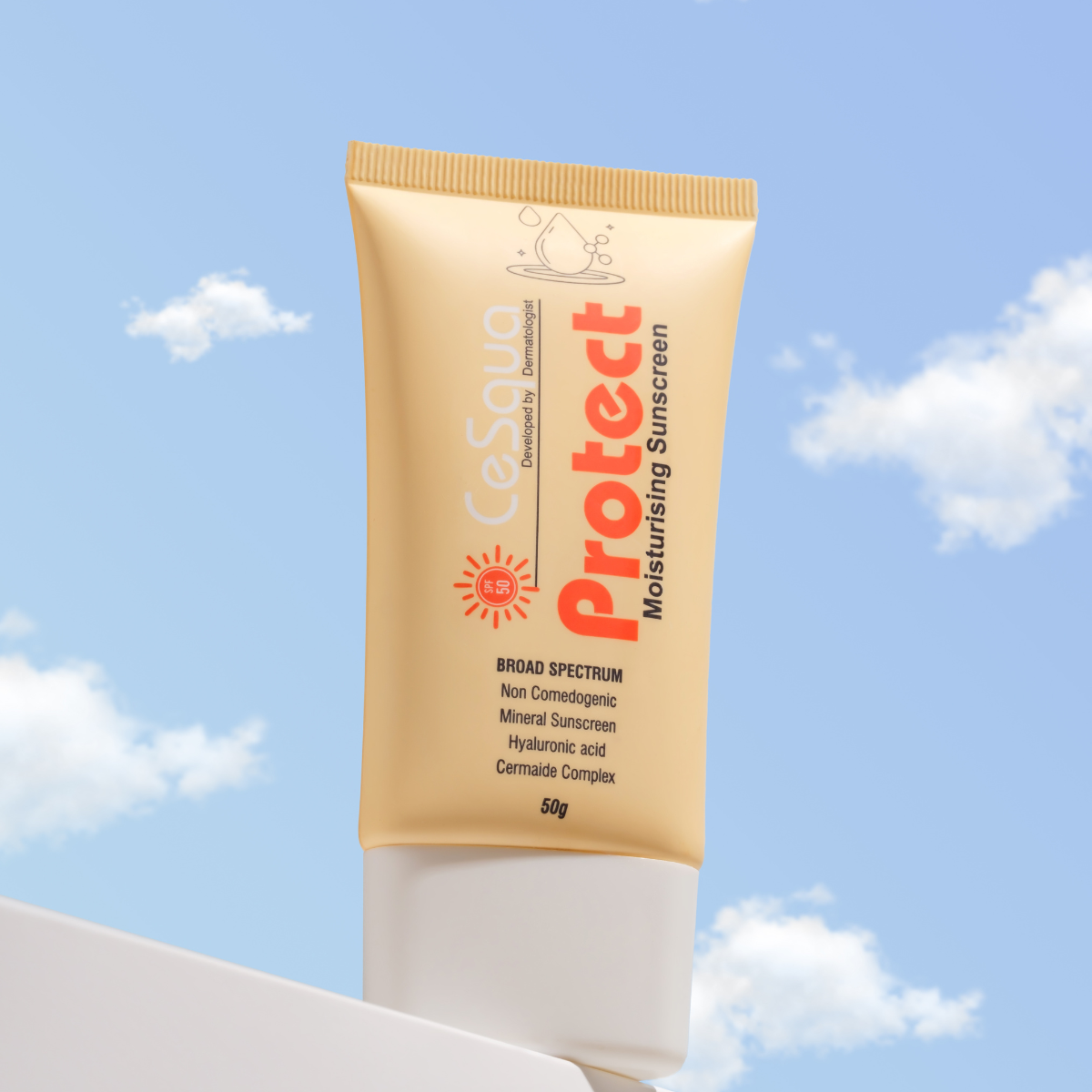
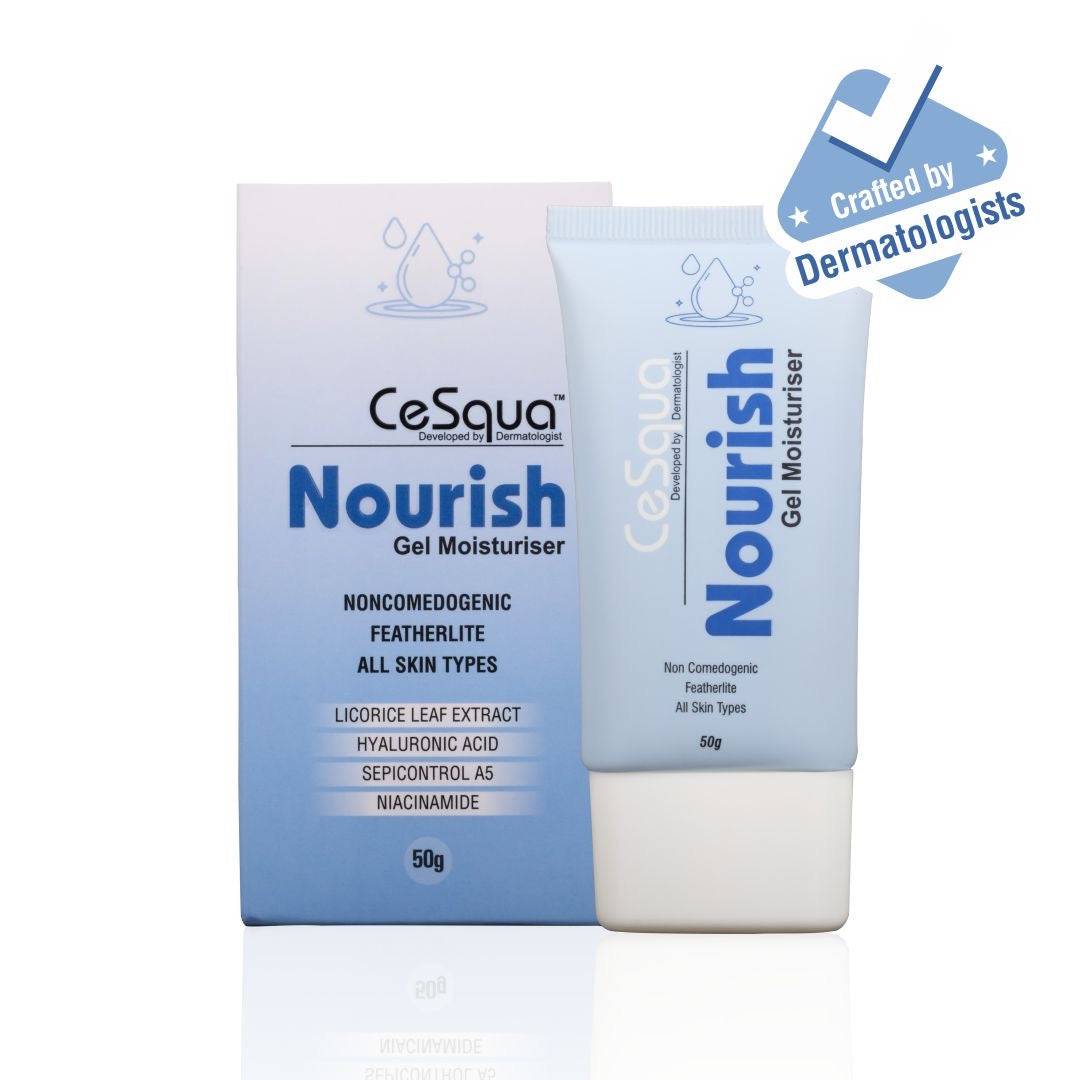
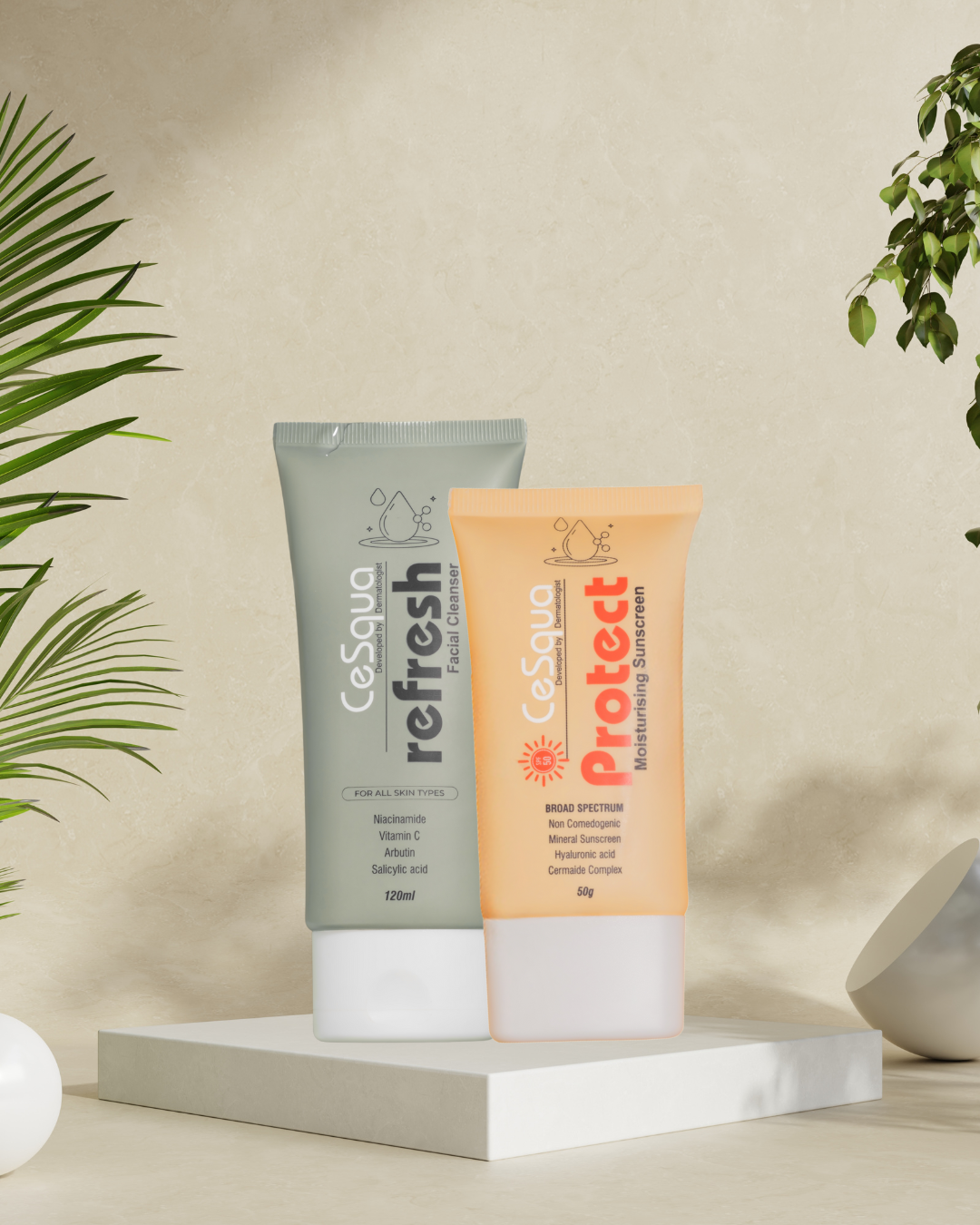
CeSqua's own routine illustrates why looking at individual formulas matters. Protect Moisturising Sunscreen is described as fragrance-free and suitable for sensitive skin. Nourish Gel Moisturiser is described as free from synthetic fragrance, but its formula includes tea tree oil and other botanical ingredients. Refresh Facial Cleanser has a mild fragrance and contains salicylic acid. These products have different fragrance profiles and active ingredients; it would be misleading to call the entire routine fragrance-free.
If you have a confirmed fragrance allergy, do not assume that “free from synthetic fragrance” is equivalent to avoiding every aromatic ingredient. Review the current ingredient label of any product you are considering and follow your dermatologist's advice about specific substances to avoid. If you are simply prone to occasional sensitivity, your choice may be broader, but introduce each formula separately so that a reaction is easier to identify.
A practical routine for sensitive skin
At CeSqua, we favor a simple framework: cleanse, hydrate, protect. It keeps the essentials visible without suggesting that everyone needs the same products. When sensitivity is the main concern, first establish which cleanser, moisturizer, and sunscreen your skin tolerates. You can think about treatment ingredients after the basics feel comfortable.
Cleanse without adding unnecessary friction
Use lukewarm water, a light touch, and a cleanser suited to your skin. Scrubbing longer or washing repeatedly to get a “clean” feeling can leave already uncomfortable skin feeling worse. Evening cleansing is particularly helpful for removing sunscreen and daily buildup. If your skin is very dry, assess whether you need a cleanser in the morning as well; comfort matters more than following a rigid rule. Our guide to when more cleansing can do more harm explains how to make that decision.
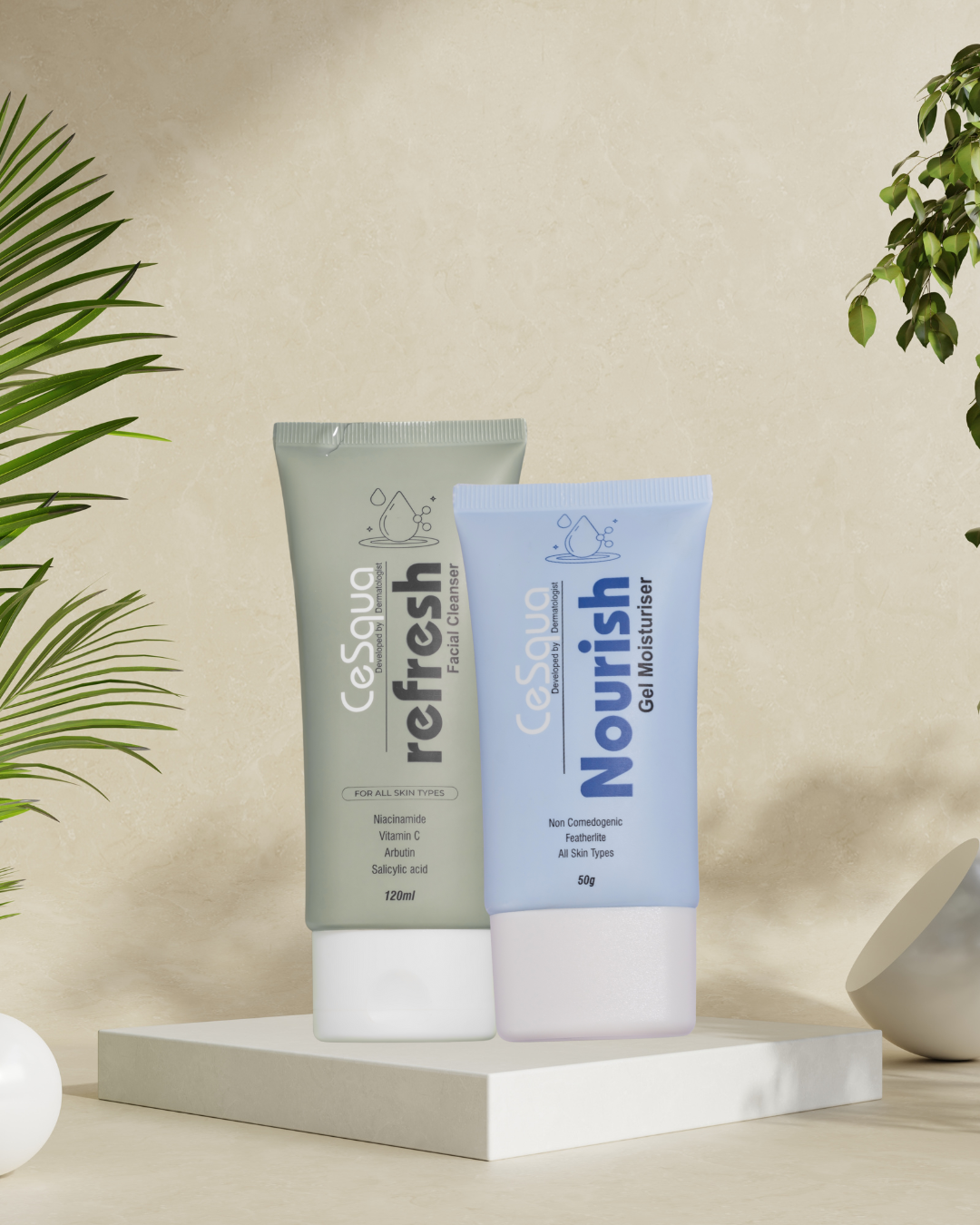
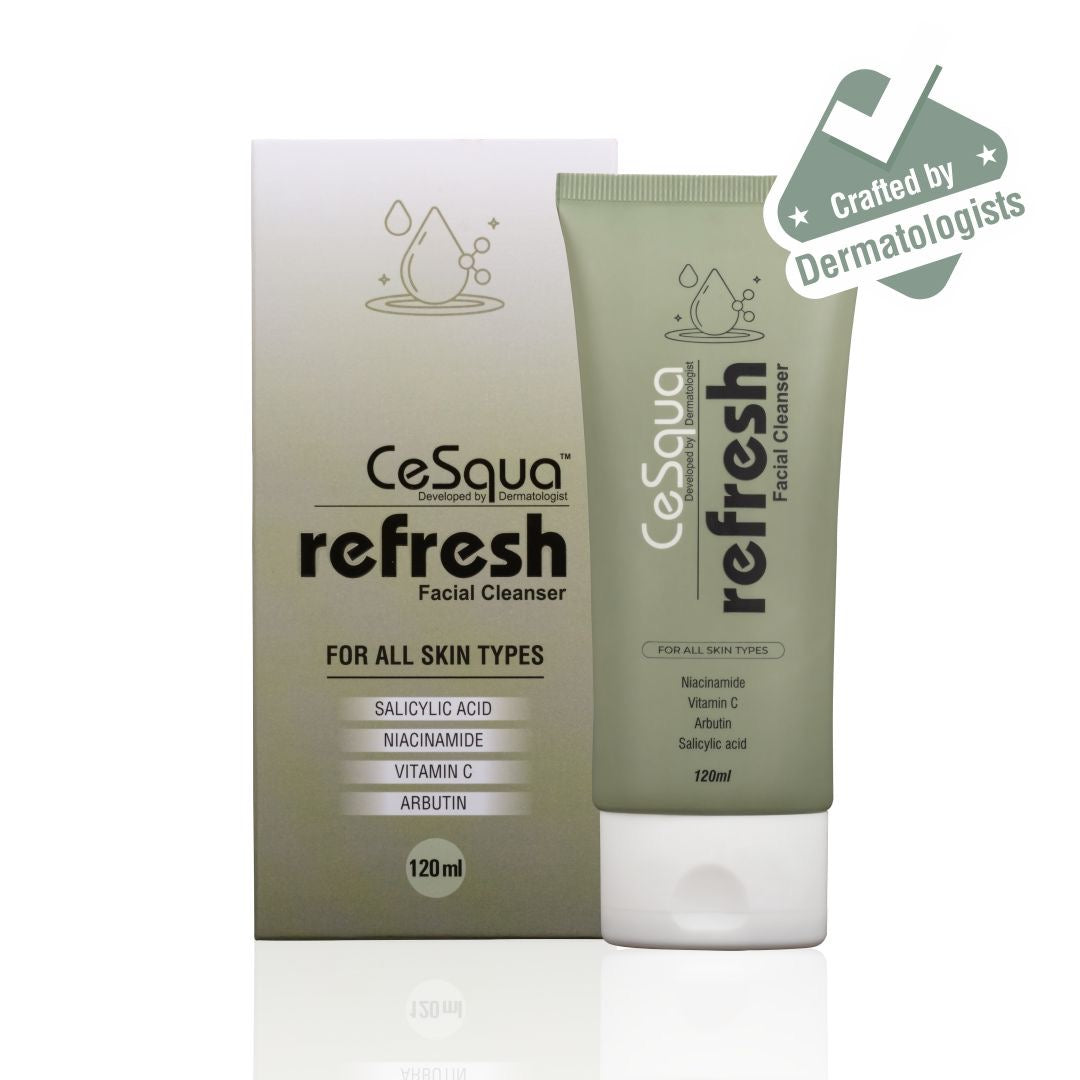
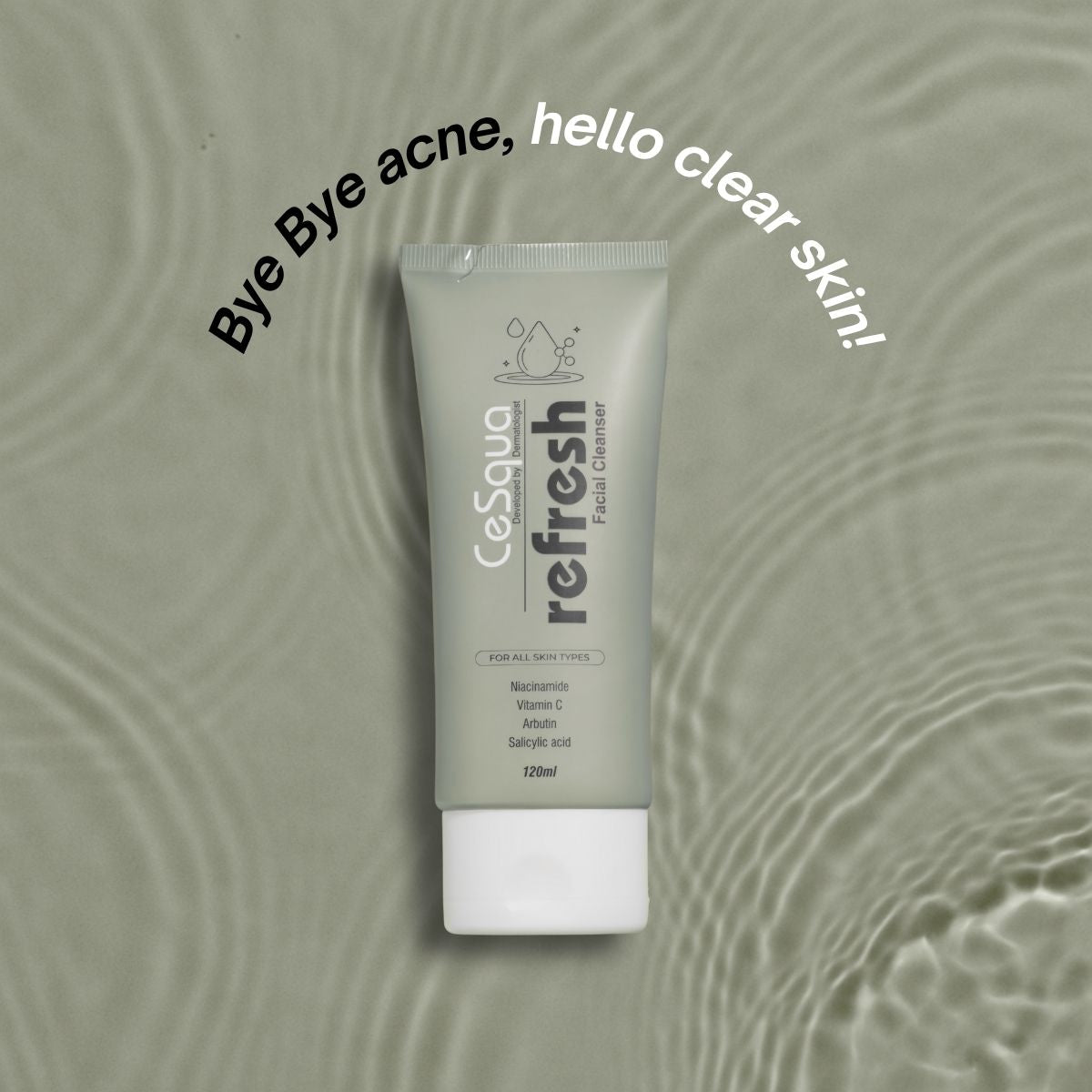
Refresh Facial Cleanser is positioned for sensitive, oily, and acne-prone skin, and includes salicylic acid, niacinamide, hyaluronic acid, and sodium PCA. It also has a mild fragrance. Someone who tolerates mild scent and wants an active cleanser may consider it; someone avoiding fragrance should not treat it as a fragrance-free choice. If your skin is currently stinging or flaky, be particularly cautious about adding an exfoliating cleanser.
Hydrate according to what your skin needs now
Moisturizing helps address dryness and tightness, whether your skin is oily or dry. Ingredients such as glycerin, hyaluronic acid, panthenol, and ceramides are commonly chosen for hydration and barrier support, but the complete formula and your individual tolerance still matter. You can apply moisturizer while skin is slightly damp if that feels comfortable. See our explanation of moisturizing damp versus dry skin for a more detailed routine.
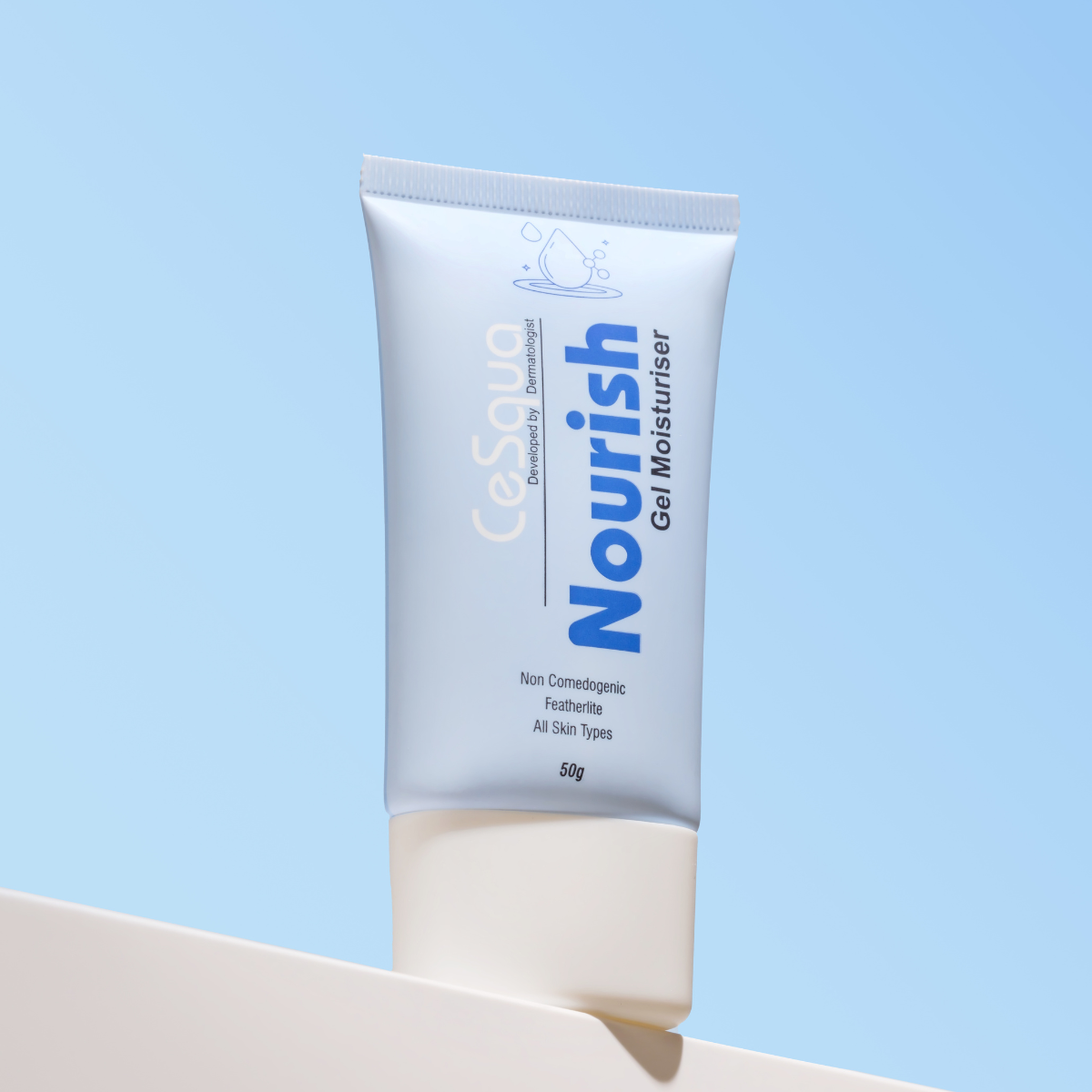
Nourish Gel Moisturiser offers a lightweight, non-greasy texture and is described as free from synthetic fragrance. It contains chamomile, licorice, tea tree oil, zinc PCA, and witch hazel. Those details matter more than a broad “gentle” label: if botanical ingredients or essential oils are an issue for you, check whether this formula fits your avoidance plan before using it.
Protect your skin every morning
Sunscreen should remain a daily priority even when your routine is pared back. Find a texture you can apply evenly and use consistently. Protect Moisturising Sunscreen combines moisturizer and sunscreen in one step and is described as fragrance-free, alcohol-free, water-resistant, and suitable for sensitive, oily, and acne-prone skin. As with any new formula, check its full label and test it if your skin reacts easily. Reapply as directed, particularly when you spend time outdoors or after swimming or heavy sweating. If sunscreen textures tend to bother you, our guide to choosing sunscreen for sensitive skin can help you narrow the options.
Do not feel compelled to buy all three steps at once. Keeping a cleanser and moisturizer you already tolerate while testing a new sunscreen, for example, makes it easier to tell how the new product behaves. The same principle works in reverse: change only what needs changing.
Best practices when your skin reacts easily
- Change one thing at a time. If you replace your cleanser, moisturizer, and sunscreen together, it becomes difficult to work out what caused a reaction.
- Do not use smell as your safety test. A neutral-smelling product can contain masking ingredients, while a fragrance-free product may smell of its raw materials.
- Keep active ingredients in context. If you already use a retinoid or exfoliant, pause before adding another active product when your skin feels uncomfortable. More treatment does not necessarily mean better care.
- Separate a temporary sensation from a persistent problem. Ongoing burning, swelling, itching, or a spreading rash is a reason to stop the suspected product. Seek medical care if symptoms are severe or do not settle.
- Keep the packaging long enough to assess the product. Ingredient names and directions are useful if you later need to identify a trigger or discuss a reaction with a professional.
For persistent sensitivity, think beyond a single label. Over-cleansing, frequent exfoliation, and an already uncomfortable skin barrier can make it harder to judge any new formula. Our guide to skin barrier and moisture barrier concerns explains what to watch for when the whole routine seems to sting.
Frequently asked questions
Is fragrance-free always better than unscented for sensitive skin?
It is usually the clearer starting choice when you want to reduce fragrance exposure. Unscented tells you little about whether fragrance materials were used to mask an odor. But a fragrance-free formula can still irritate you for other reasons, so check the full ingredient list and your individual triggers.
Can a fragrance-free product still have a smell?
Yes. Raw ingredients can give a product its own odor without fragrance being added to perfume it. The presence or absence of a noticeable smell does not establish what is in the formula.
Can an unscented product contain fragrance?
Yes. Some unscented products use masking fragrance to reduce another odor. Others may simply have little natural smell. Check the ingredient list rather than assuming either explanation applies to every product.
Is synthetic-fragrance-free the same as fragrance-free?
Not necessarily. A product without synthetic fragrance may still contain fragrant plant ingredients or essential oils. That distinction is particularly important if you are avoiding fragrance because of an allergy rather than a preference about smell.
Are essential oils safer because they are natural?
Natural origin does not guarantee that an ingredient will suit sensitive skin. Essential oils contain aromatic compounds, and some people react to them. If you know that a particular oil or fragrance component causes a problem, check for it by name.
Does fragrance-free mean hypoallergenic?
No. It addresses the use of fragrance, not every possible source of irritation or allergy. Someone may still react to another ingredient in a fragrance-free formula.
What if my skin stings when I apply every moisturizer?
Stop using products that cause persistent burning and simplify the routine rather than layering on more treatments. If even bland products or water sting, or you have a continuing rash, a dermatologist can help assess what is happening. The issue may not be fragrance alone.
How should I test a new product?
Apply a small amount to a limited area of skin first and watch for a reaction before using it more broadly. Introduce one new product at a time. If you suspect a specific allergy or have repeated rashes, ask a dermatologist about formal patch testing; home testing cannot diagnose an allergen.
The bottom line
Choose fragrance-free over unscented when avoiding fragrance is your priority. Then check the full formula, consider your known triggers, and give your skin a chance to adjust to one new product at a time. If you only want a product with little noticeable smell, unscented may be enough, but it does not answer the fragrance question.
A straightforward routine makes those decisions easier. CeSqua's cleanse, hydrate, protect approach is built around fewer steps; choose each formula on its own merits, especially when sensitive skin calls for a closer look at fragrance and active ingredients.